Water heater expansion tanks
Quick answer
Expansion tanks absorb the pressure that builds as water heats and expands. California requires one on new installs, and they protect your heater and plumbing.
Where expanding water goes
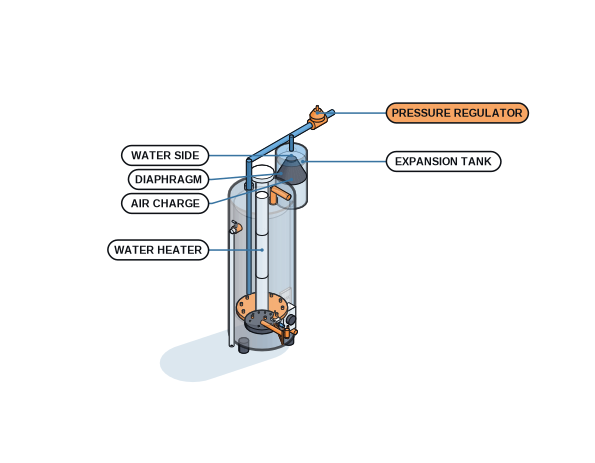
A storage water heater with a pressure regulator and an expansion tank on its cold supply. The tank is cut away to show the diaphragm between the water and the air. Pipe runs are shortened for clarity.
The system stays see-through with its parts labeled. Turn or zoom the system, then choose a part or a step. Use the arrow keys when the drawing is focused.
Still diagram and written explanation
- Expansion tank
- A small steel tank on the cold supply between the heater and the regulator. It gives expanding water somewhere to go.
- Air charge
- Air sealed behind the diaphragm acts as a cushion. It is set to match the home's water pressure when the tank is installed.
- Diaphragm
- A flexible diaphragm keeps the air and water apart. Expanding water pushes it into the air side.
- Water side
- Open to the cold line. Expanded water flows in as the heater warms it and back out as hot water is used.
- Pressure regulator
- Lowers street pressure for the house. Like a check valve or backflow preventer, it can stop expanded water flowing back to the street, which makes the plumbing a closed system.
- Water heater
- Heating makes water expand. In a closed system, that extra volume has to go somewhere.
- A closed system. A pressure regulator, check valve or backflow preventer can stop water flowing back toward the street once it is in the house.
- Heating expands the water. As the heater warms the water, it takes up more room. In a closed system that raises the pressure in every pipe unless the water has somewhere to go.
- The tank takes it in. Expanding water flows into the tank and pushes the diaphragm into the air side. The air compresses, which keeps the pressure below the relief valve setting.
- Set to the house pressure. The air charge is set to the home's water pressure, so the tank and the regulator work together. A plumber checks both; a tank that has lost its air charge cannot do its job.
- What it helps prevent. Controlling expansion helps prevent relief valve dripping and the pressure swings that strain faucets, toilets and appliances.
Before you touch the system. An expansion tank is part of a pressurized system. Have a qualified plumber check the regulator, the tank and its air charge, and do not open fittings under pressure.
Your pressure regulator is the first line of defense against pressure surges, and the expansion tank is the second. High pressure makes appliances and pipes fail early, and early failures put water where you don't want it.
If the regulator isn't working, the expansion tank can't do its job. Change them together. With a working regulator, an expansion tank prevents leaky faucets, toilets that refill on their own, broken icemakers, damaged dishwashers and struggling RO systems, and usually stops water hammer.
What an expansion tank does
Brandon at Quick Water Heater · 0:19–1:42
How an expansion tank gives heated water room to expand.
Watch on YouTubeRather we did it?
Expansion tank service