Installing a temporary water heater
How a temporary heater connects
A small electric water heater connected to the existing hot and cold lines while the permanent heater is out. Distances are shortened for clarity; every setup depends on the home.
The setup stays see-through with its parts labeled. Turn or zoom the setup, then choose a part or a step. Use the arrow keys when the drawing is focused.
Still diagram and written explanation
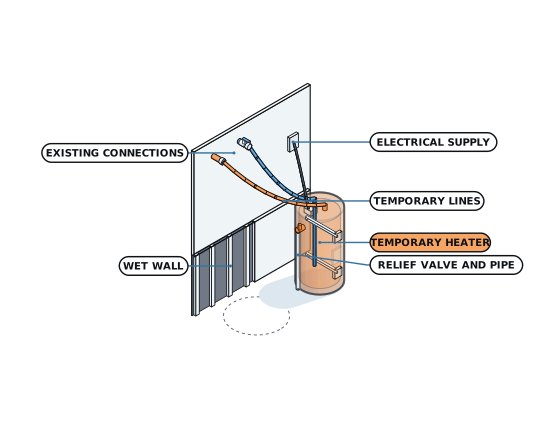
- Temporary heater
- A small electric storage heater, such as a 20 gallon unit, keeps some hot water available while the main heater is out.
- Existing connections
- With a tank heater, the temporary lines connect where the old heater's hot and cold lines were. With a tankless, they connect at its service valves.
- Temporary lines
- Hoses or temporary piping carry cold water to the temporary heater and hot water back to the house.
- Relief valve and pipe
- The temporary heater has its own temperature and pressure relief valve, piped to a safe place like any water heater.
- Electrical supply
- It needs a suitable circuit for its rating, connected by a qualified person.
- Wet wall
- After a flood, wet materials around the old heater may need to be opened and dried. A restoration professional decides what has to come out.
- Why a temporary heater. You might need one after a flood, while your heater is being serviced, or while a replacement is on its way.
- Tap into the plumbing. With a tank heater, the temporary lines connect where the old heater connected, so the house has hot water again.
- With a tankless. With a tankless, the connection is made at its service valves, the same valves used to flush it.
- Power and safety. The temporary heater needs a suitable electrical supply, and it keeps its own relief valve and discharge pipe.
- Dry out, then replace. Meanwhile the area around the old heater can dry out. A restoration professional decides which wet materials need to come out before the new heater goes in.
Before you touch the setup. If you smell gas, leave the area and call your gas supplier or emergency services from outside. Otherwise, if safe to reach, turn off the heater's gas or electrical supply before shutting off its cold water inlet. Stay clear of hot water and standing water near electrical equipment. Call a qualified plumber before draining a hot or damaged tank.
You might need a temporary heater after a flood, while your heater is being serviced, or for other reasons. With a tank heater, we tap into the existing plumbing and run lines to a 20 gallon electric heater. With a tankless, we tap into the service valves instead.
After a water heater flood it's crucial: the drywall has to come out and the area has to dry properly before it's replaced, and the temporary heater keeps the household running.
Rather we did it?
Flood restoration