The temperature and pressure relief valve
Quick answer
The T&P valve is a critical part of your water heater and your plumbing. It stops the heater from exploding or flooding your home by opening if the water reaches 210°F or the pressure goes over 150 psi.
What does the relief valve do?
Cutaway of a gas storage water heater. The temperature and pressure (T&P) relief valve sits near the top of the tank with its probe in the hottest water, and its discharge pipe runs down to an open end near the floor. The valve is enlarged for clarity; layouts vary by model.
The heater stays see-through with its parts labeled. Turn or zoom the heater, then choose a part or a step. Use the arrow keys when the drawing is focused.
Still diagram and written explanation
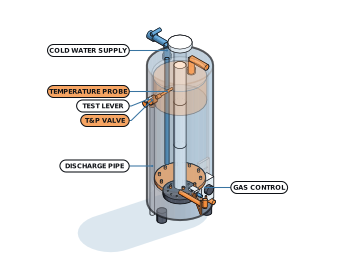
- T&P valve
- An automatic safety valve. A spring holds it shut until the water gets too hot or the pressure gets too high, then it opens and lets water out. Each valve is marked with its settings, for example 210°F and 150 psi, and must suit the heater it is fitted to.
- Temperature probe
- The valve's temperature element reaches into the tank. It has to sit in the top 6 inches of the tank, where the hottest water collects.
- Test lever
- Lifting the lever opens the valve by hand. Manufacturers call for it to be operated periodically, but the water released is scalding and an old valve may not close again, so follow the heater's manual or have a plumber do it.
- Discharge pipe
- Carries released water down to an open end near the floor or to an approved drain, where it cannot scald anyone. It must drain completely and never be threaded, plugged or capped.
- Cold water supply
- House water pressure reaches the tank here. High incoming pressure, or water expanding as it heats in a closed system, can push the valve open.
- Gas control
- Its thermostat sets the water temperature. If the controls fail and the water overheats, the relief valve is the backup. Gas work belongs with a qualified technician.
- Where it senses heat. Hot water rises and collects at the top of the tank. The valve's probe sits there, in the hottest water.
- When it opens. If the water gets too hot or the pressure passes the valve's setting, it opens against its spring and sends water down the discharge pipe instead of letting the heat or pressure build.
- Why it drips. A valve that has opened may not seat fully again, and minerals can hold it slightly open, so it keeps dripping. A drip is a sign to find the cause, not something to plug.
- Find the cause. Common causes are high water pressure, thermal expansion with no expansion control, or a heater running too hot. A plumber checks the pressure, the expansion control and the thermostat.
- Check and replace safely. The lever opens the valve by hand for the periodic check the manufacturer calls for. The water is scalding, so follow the manual or leave it to a plumber. A replacement needs the right rating for the heater and an open discharge pipe.
Before you touch the heater. Water from a relief valve can be scalding. Keep clear of the pipe outlet, and never cap, plug or bypass the valve or its pipe. If the valve drips or has discharged, have a qualified plumber find the cause. Do not loosen hot or pressurized connections.
Why they leak
The valve drains water when it senses pressure or temperature is too high. Usually it opens to protect the heater and then won't close completely, which causes a slow leak.
It can easily malfunction, so test it to make sure it works. And find out what made it open in the first place: often the pressure regulator has failed, or the heater is overheating. Fix the cause, or it will happen again.
Replacing it
Have a qualified plumber assess the valve and the cause of the discharge. The replacement must have the correct rating for the heater and a correctly installed discharge pipe. Never cap, plug or bypass the valve.
A leak near the valve's threaded connection needs inspection to distinguish a connection leak from damage to the tank. Do not loosen hot or pressurized connections to diagnose it.
The purpose of the relief valve
Brandon at Quick Water Heater · 0:07–0:25
The T&P valve protects the heater from excess temperature and pressure. Never cap or plug the valve or its discharge pipe; have a qualified plumber assess a leak.
Watch on YouTubeRather we did it?
T&P valve replacement from $395 + parts