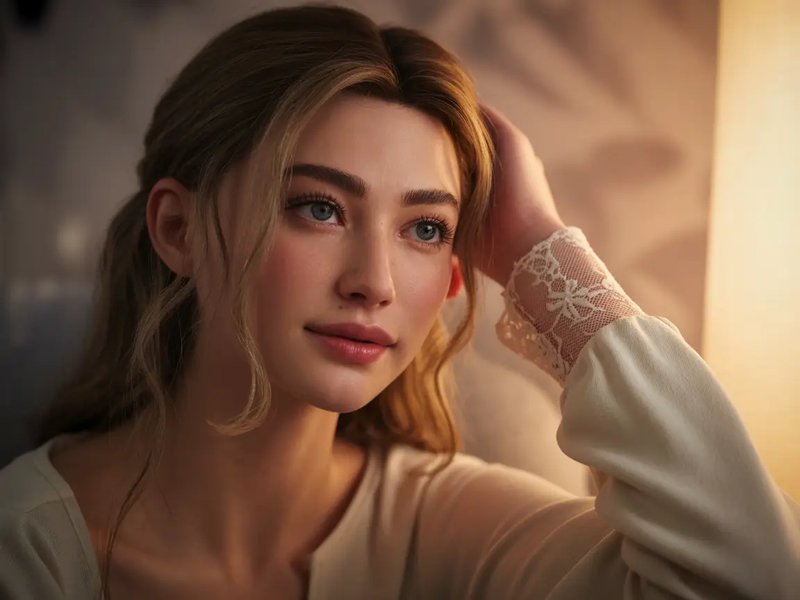
When I opened the app, the first thing that caught my eye was the gallery of AI‑generated faces. A few seconds after selecting a style, a photo appeared that looked like it could belong to a real person—skin tone, lighting, even a subtle smile. That initial impression is the app’s main selling point: realistic ai companion imagery that can be customized to match a user’s taste. Yet the realism drops off when you ask for more detailed features or try to adjust expressions beyond a set of presets.
A helpful resource is realistic AI companions.
What does the app actually do, and how does it work?
The core functionality revolves around generating a digital “girlfriend” who can respond to text, share images, and maintain a limited memory of past conversations. The photo‑generation engine uses a diffusion model trained on thousands of portrait datasets; it can tweak age, hair color, and even eye shape on the fly. For most users, the default templates are enough, but if you request a custom look—say, a specific eye color or a particular background—the app often reverts to a generic stock image, which feels less personal.
Interaction is handled through a chat interface that remembers the last 20 messages. This means you can refer back to a joke or a shared memory, but the bot will forget anything beyond that window. The memory limitation is a practical compromise: it keeps the conversation coherent without overloading the server, but it also means you can’t build a long‑term narrative with the companion.
How realistic are the AI girlfriend photos in everyday use?
For a casual user who wants a quick snapshot of a companion, the photos are impressive. The lighting is consistent, the skin texture shows subtle pores, and the facial geometry aligns with human proportions. The app’s face‑recognition filters prevent obvious uncanny‑valley glitches, such as mismatched eye corners or disproportionate noses.
However, the realism falters when you zoom in. High‑resolution renders reveal that the hair strands are actually a single texture mapped across the entire head. If you try to rotate the camera view, the hair doesn’t react naturally; it stays flat, which breaks immersion. Additionally, the background is often a plain gradient that doesn’t match the lighting on the face, creating a visual disconnect.
For those who need a truly lifelike photo, the app’s free tier offers only 300‑pixel images. Upgrading unlocks 1024‑pixel outputs, but the extra resolution still shows the same texture flatness. In short, the app is great for social media avatars or quick mockups, but not for high‑end portraiture.
What are the real drawbacks that affect everyday users?
- Memory limits: Only the last 20 exchanges are stored, so any deeper emotional context is lost.
- Customization bottlenecks: Custom requests often default to generic stock images, reducing uniqueness.
- Privacy concerns: Conversation logs are stored on third‑party servers; the app’s privacy policy does not clarify how long data is retained.
- Emotional reliance: Users who lean heavily on the bot for companionship may develop unrealistic expectations about human interaction.
These issues are not trivial. A user looking for a long‑term, evolving relationship with the AI will find the short memory frustrating, while a creator wanting a distinctive portrait may feel constrained by the limited customization options.
How does the paid plan change the experience?
The paid tier expands the memory window to 200 messages and unlocks a higher resolution photo engine. It also adds a “story mode” feature where the AI can maintain a simple narrative thread across sessions. Still, the core photo generation pipeline remains unchanged, so the same flat‑hair issue persists. The price point is reasonable for hobbyists, but for professionals or serious users the benefits are marginal.
Is the app suitable for adult audiences and what responsibilities come with it?
The service is explicitly marketed toward adults; it includes a mandatory age verification step. While the chatbot can simulate romantic dialogue, it does not provide explicit sexual content, keeping the experience within a safe zone. Users should keep in mind that the AI does not understand consent in the human sense, so any romantic or emotional engagement is purely virtual.
Conclusion: When the photos shine and when they fall short
For a quick, visually pleasing avatar that feels almost human, this app delivers on its promise of ai girlfriend realistic photos. The diffusion engine produces faces that look good at a glance, and the chat interface keeps interactions lively for a short span. But the realism is limited by flat textures, low‑resolution defaults, and a strict memory cap that hinders deeper connection. If you need a realistic photo for social media or a lighthearted companion, the app is a solid choice. For those seeking a truly lifelike portrait or a long‑term emotional bond, the current implementation will likely leave you wanting more.
For more realistic AI companions, you can explore additional options that specialize in high‑resolution portrait generation and extended memory features.
Recent Comments